
Booking an intensive driving course can feel like a big decision, especially if you’re unsure how many hours you’ll need or which course is best suited to your experience.
Many learners assume there is a simple answer, but the reality is that no two learners are the same. Someone who has never driven before will have very different requirements to someone who has already completed 30 hours of lessons or recently failed their driving test.
Choosing the wrong course can leave you paying for additional tuition later or booking more hours than you actually need. That’s why it’s important to understand what each course is designed for and how to make an informed decision before booking.
In this guide, we’ll explain the factors that influence how many hours you may need, who each type of intensive course is best suited to, and why choosing the right course from the start can help you save both time and money.
Table of Contents - click to jump
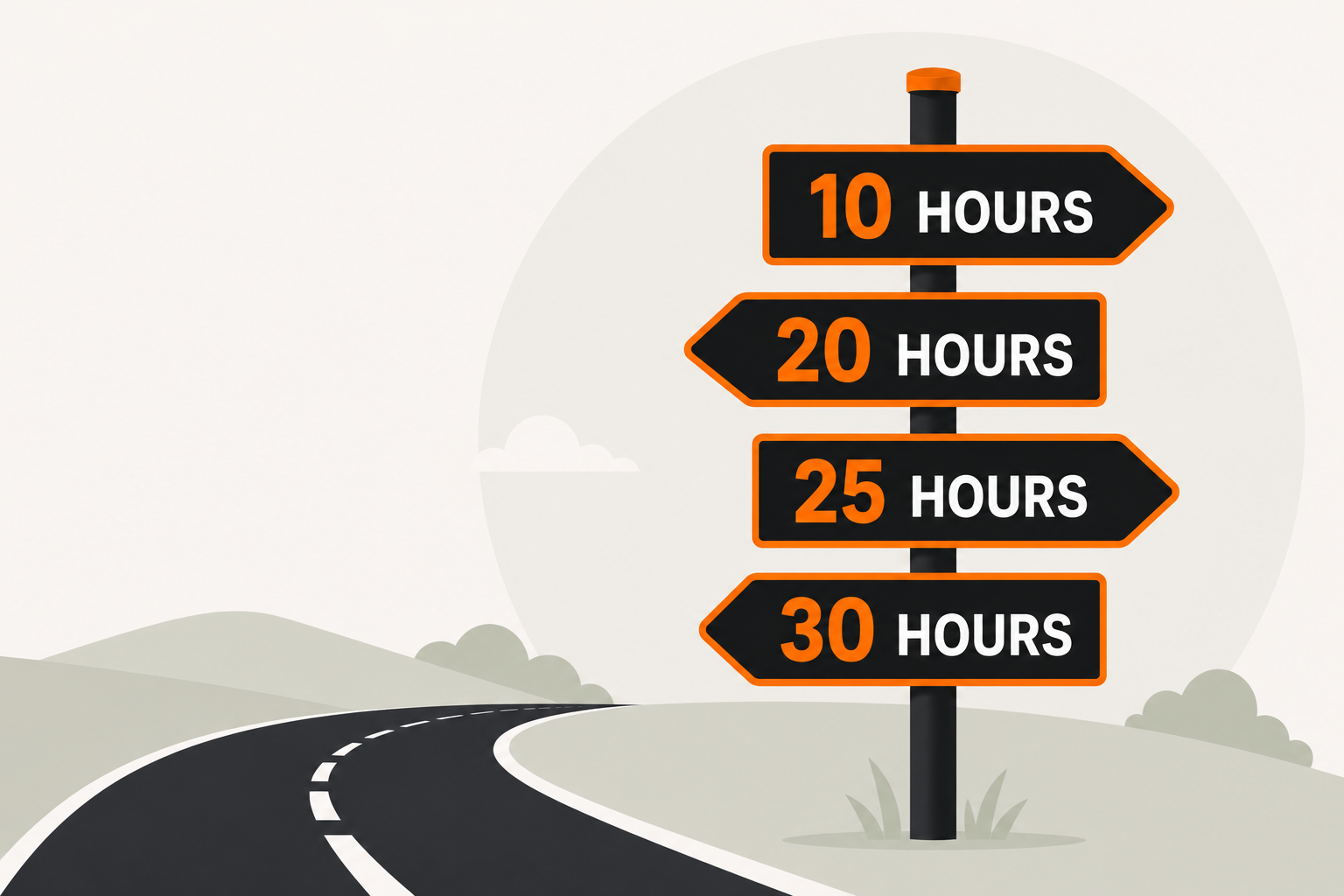
What Is an Intensive Driving Course?
An intensive driving course is designed to condense your learning into a much shorter period than traditional weekly lessons.
Rather than taking one or two hours each week over several months, you’ll complete longer driving sessions over consecutive days or weeks. This allows you to build momentum, reinforce what you’ve learned and often reach test standard much more quickly.
Many learners choose intensive courses because they fit around university holidays, career changes, relocation or simply because they want to pass as efficiently as possible.
However, an intensive course isn’t about rushing the learning process. It’s about learning consistently, with fewer gaps between lessons, so your skills continue to develop without needing to revisit previous topics every week.
Why There Isn't a One Size Fits All Course
One of the biggest misconceptions about intensive driving courses is that there is a magic number of hours that guarantees a pass.
Unfortunately, that simply isn’t true.
Every learner starts from a different point. Some people have never sat behind the wheel before, whilst others may have completed dozens of lessons with another instructor. Some learners build confidence quickly, while others naturally take more time to develop key driving skills.
Several factors can affect how many hours you may need, including:
- Previous driving experience
- Confidence levels
- Whether you have passed your theory test
- Opportunities to practise outside lessons
- Manual or automatic transmission
- Previous driving test attempts
- How quickly you retain new information
This is why reputable driving schools avoid guaranteeing that every learner will pass after a fixed number of hours.
A course should always be chosen based on your current ability rather than simply selecting the cheapest option available.
Which Course Is Right for Complete Beginners?
If you’ve never driven before, it’s important to be realistic about the amount of tuition you’ll need.
Learning to drive involves far more than simply controlling the vehicle. You’ll also need to develop hazard awareness, observations, positioning, planning, manoeuvres and confidence in a wide variety of road conditions.
Whilst everyone progresses differently, complete beginners generally require one of the longer intensive courses to allow enough time to build these core skills properly.
Remember, the objective isn’t simply to complete a course. It’s to become a safe, confident driver who is genuinely ready to pass their practical test.
I've Already Had Driving Lessons. Which Course Should I Choose?
Many learners have already completed lessons with another instructor before deciding to switch to an intensive course.
Perhaps you’ve had 20 or 30 hours of tuition but haven’t driven for several months. Maybe you’ve moved to Norwich or changed instructors and want a faster route to passing.
In these situations, you may not need as many hours as a complete beginner.
However, it is important not to underestimate how quickly driving skills can fade after a break. Spending a little extra time refreshing your confidence can often make the difference between passing first time and needing an expensive retest.
I've Failed My Driving Test. What Now?
First off – don’t panic! Failing your driving test does not necessarily mean you need another full course.
Many learners only need targeted tuition focusing on the specific faults identified by the examiner.
Whether those faults relate to observations, positioning, roundabouts or confidence, concentrating on those areas is usually far more beneficial than starting again from the beginning.
If you’ve recently failed your test, our guide on what to do after failing your driving test explains how to use examiner feedback to prepare more effectively for your next attempt.
Returning to Driving After a Long Break
Some learners return to driving after several years away from lessons.
This might be because work, university or family commitments got in the way, or perhaps confidence was lost after an unsuccessful test.
The good news is that driving skills often return much faster than people expect. Whilst you may feel rusty during your first lesson, previous experience usually helps you rebuild confidence more quickly than starting from scratch.
An instructor can quickly assess your current standard and recommend a suitable course based on your existing ability.
What If I'm a Nervous Driver?
Feeling nervous is completely normal.
In fact, many of the learners who contact us describe themselves as lacking confidence behind the wheel.
The key is not to avoid intensive learning because of nerves. Instead, it’s about choosing a course that gives you enough time to build confidence gradually.
A well-structured intensive course allows you to spend more time practising whilst your previous lesson is still fresh in your mind. This continuity can actually help many nervous learners feel more relaxed than traditional weekly lessons.
If confidence is something you struggle with, you may also find our article on intensive driving courses for nervous learners helpful.
Manual or Automatic?
Another common question is whether to learn in a manual or automatic vehicle.
Manual driving gives you greater flexibility when choosing vehicles in the future, whilst automatic lessons can feel less overwhelming for some learners because there are fewer controls to manage.
Neither option is better for everyone.
The right choice depends on your future driving needs, confidence and personal preferences.
If you’re still undecided, we can help you make the right decision.
Why Nobody Can Tell You Exactly How Many Hours You'll Need
This is probably the most important section of this guide.
You may come across driving schools that suggest a certain number of hours will guarantee a pass. Whilst this may sound reassuring, the reality is that nobody can accurately predict how many hours a learner will need without first assessing their current ability.
Every learner develops at their own pace. Confidence, previous driving experience, learning style and opportunities for private practice all influence how quickly someone progresses. For this reason, any recommendation should always be treated as a guide rather than a guarantee.
The official GOV.UK guidance also highlights that every learner’s journey is different, and provides useful information on learning to drive, booking your test and what you’ll need before taking it.
At The Best Intensive, our priority is ensuring learners are genuinely ready for their practical test, not simply fitting everyone into the same package. Choosing a course based purely on price can often be a false economy if it leaves you needing additional lessons later.
Questions You Should Ask Before Booking an Intensive Driving Course
Before committing to any driving course, it is worth asking a few important questions. Doing a little research beforehand can help you avoid unexpected costs and ensure you choose a course that genuinely meets your needs.
For example, ask whether your practical driving test is included within the package or whether it is booked separately. Find out what happens if you require additional hours beyond the course you’ve chosen, and whether there is flexibility to add more tuition if needed.
It is also worth asking how the course is structured. Some intensive courses are completed over consecutive days, whilst others can be spread across a slightly longer period to better suit your availability and learning style.
If you’ve already completed lessons elsewhere, ask whether the driving school can tailor the course around your previous experience rather than starting from the beginning again.
Finally, don’t be afraid to ask for honest advice. A reputable driving school should recommend the course they genuinely believe is right for you, not simply the most expensive option.
If you’d like to do some additional research before choosing a course, the DVSA-backed Save Driving For Life website contains a wide range of advice for learner drivers, including guidance on preparing for your theory and practical tests.
Why Choosing the Cheapest Course Can Cost More
When comparing prices, it can be tempting to choose the shortest or cheapest intensive course available.
However, this isn’t always the most cost-effective decision.
Booking too few hours often means learners reach the end of their course before they are fully prepared for their practical test. This can result in additional lessons, another test fee and extra time away from work or education.
Choosing a course that realistically matches your current ability is usually a far better investment than trying to save money at the start.
Learning to drive should be viewed as exactly that, an investment. The objective isn’t simply to complete a course, but to gain the skills and confidence needed to drive safely for years to come.
How The Best Intensive Helps You Choose the Right Course
At The Best Intensive, we understand that choosing the right course can feel overwhelming, particularly if you’ve never learnt to drive before or have had mixed experiences with previous instructors.
Rather than encouraging every learner to book the same package, we take the time to understand your previous experience, confidence and driving goals before recommending the most suitable course.
Whether you’re a complete beginner, returning after a long break, switching instructors or preparing for another driving test, our aim is to help you choose the course that gives you the best chance of success.
You can explore all of our available intensive driving courses here to compare the different options and see which may be the best fit for your circumstances.
If you’re still unsure, there’s absolutely no pressure to decide immediately. Our team is always happy to answer questions and offer honest advice based on your individual situation.
Our Advice Before You Book
If there’s one piece of advice we’d give every learner, it’s this:
Don’t choose your course based purely on price.
Instead, think about your previous driving experience, your confidence behind the wheel and how quickly you usually learn new skills.
A course that’s slightly longer than you originally expected may actually save you money by reducing the likelihood of needing additional lessons or retaking your driving test.
Likewise, don’t compare your progress to friends or family members. Everyone learns differently, and there is no “normal” number of hours required to become test ready.
Choosing the right course from the outset will almost always lead to a smoother, less stressful learning experience.
Choosing an intensive driving course is about much more than selecting a package with a certain number of hours. It’s about finding the option that best matches your current ability, confidence and previous experience.
Whilst it may be tempting to look for the quickest or cheapest route to passing, learning to drive is not a race. Every learner develops at their own pace, and no responsible driving school can honestly guarantee exactly how many hours you’ll need before you’re ready for your practical test.
By taking the time to choose the right course, asking the right questions and approaching the process with realistic expectations, you’ll give yourself the best possible chance of becoming a safe, confident and successful driver.
If you’re unsure which course is right for you, or you’d simply like some friendly advice before booking, please contact our team. We’ll be happy to discuss your experience, answer your questions and help you choose the course that’s most appropriate for your individual needs.
FAQs
Which intensive driving course is best for a complete beginner?
Complete beginners will usually benefit from one of the longer intensive driving courses, as this provides enough time to build confidence and develop the core driving skills needed to reach test standard.
How do I know how many hours I need?
There is no fixed answer. The number of hours required depends on your previous experience, confidence, learning style and opportunities to practise outside of lessons.
Is a 10-hour intensive driving course enough?
A 10-hour course is generally most suitable for learners who are already close to test standard and only need refresher lessons before their practical test.
Can I book more hours if I need them?
Yes. If your instructor believes you would benefit from additional tuition, extra hours can usually be arranged before your practical test.
Are intensive driving courses suitable for nervous learners?
Yes. Many nervous learners actually benefit from intensive courses because regular practice helps build confidence without long gaps between lessons.
Should I choose a manual or automatic intensive course?
This depends on your future driving plans and personal preference. Manual licences allow you to drive both manual and automatic vehicles, whilst automatic lessons may feel simpler for some learners.
Do intensive driving courses include the practical driving test?
Some courses include the practical test, whilst others charge separately. Always check exactly what is included before booking.
Can I take an intensive driving course if I’ve already failed my driving test?
Absolutely. Many learners book an intensive course after a failed test to focus on improving the areas highlighted by the examiner.
Why can’t a driving school tell me exactly how many hours I’ll need?
Because every learner develops at a different pace. Any reputable driving school should recommend a course based on your current experience rather than making unrealistic guarantees.
What should I do if I’m still unsure which course to book?
Speak to the driving school before booking. An honest conversation about your previous experience and confidence will usually help identify the most appropriate course for your needs.